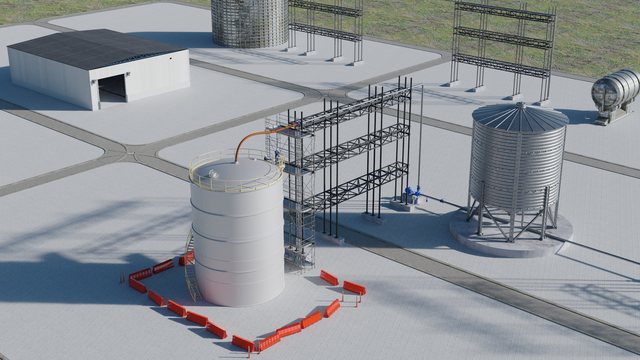
Process accident case · Hydrostatic test
The pressure test with people still nearby.
The tank was new. The water was clean. The hazard came in with the hose.
UProcessFrom Trevor Kletz, What Went Wrong?2 injured
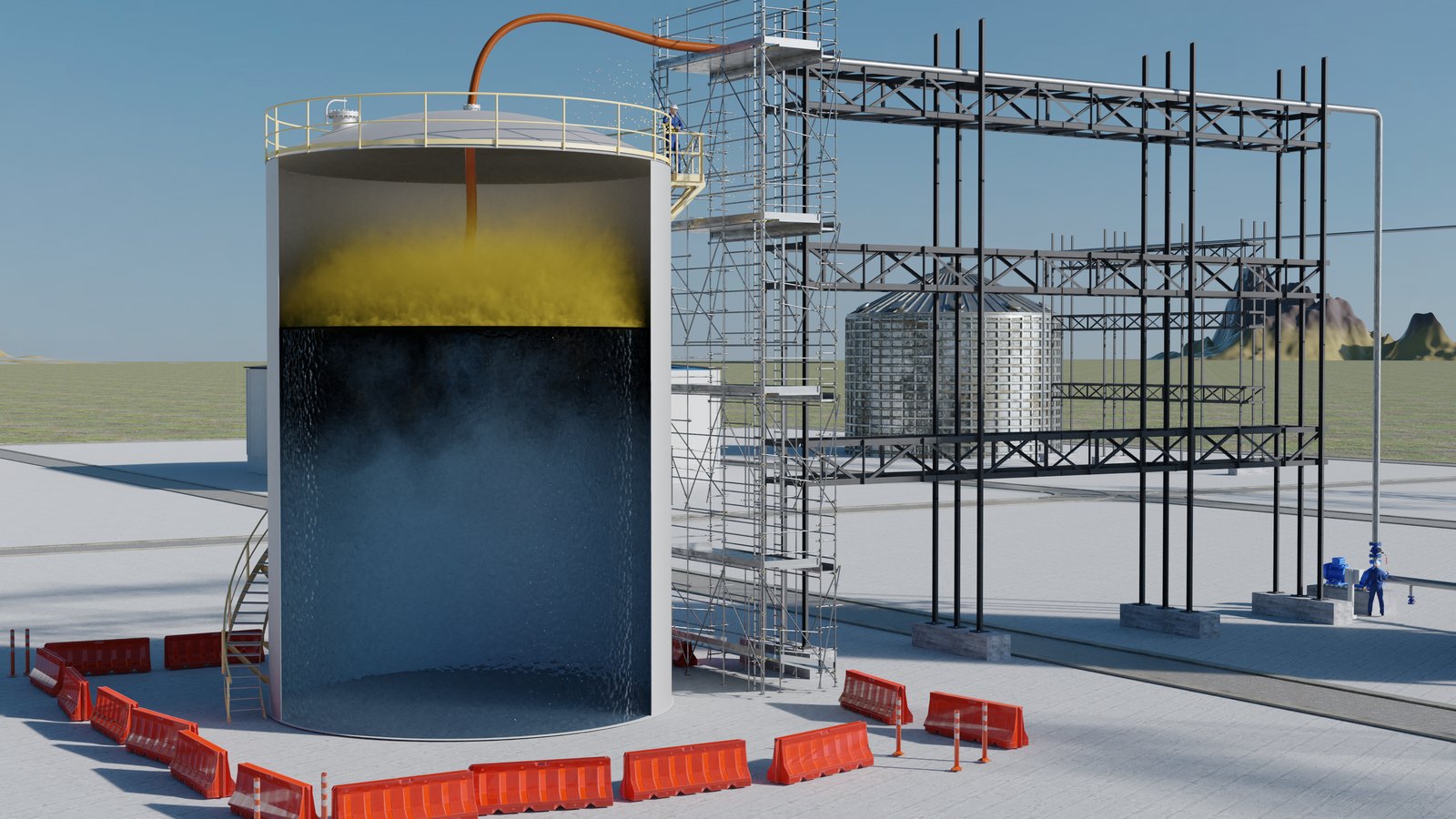 12345Tank in section · the moment before ignition
- 1The hose. A flexible loading hose that last carried fuel. Flushed, and still not clean.
- 2The fuel layer. A few litres ride in with the water, float on top and give off vapour that fills the space under the roof.
- 3Hot work at the roof edge. Two welders finish the handrails while the tank fills. The arc finds the vapour.
- 4The test load. Water proving a shell and a foundation that nothing has proven yet.
- 5The zone stopped at the ground. Barriers around the base; the roof, the most exposed place, was not inside any exclusion.
What happened, in orderFive steps. Nobody did anything unusual.
- T+0Test fillNew tank filled with water for its hydrostatic test
- T+1Fuel hoseWater routed through a hose that last carried fuel
- T+2Fuel layerFuel floats on the water and rises with the level
- T+3Roof hot workTwo welders finish the handrails on the roof during the fill
- T+4IgnitionVapour reaches the arc. Explosion; two injured
Bow-tie · none of the five barriers was in place on the day
The five barriers
| Barrier | What it is | What happened instead | System element |
|---|---|---|---|
| 1 · Fill-path service verification | Every line and hose into the tank is identified with its last service; a fuel hose is cleaned and gas-tested, or does not fill the tank. | Flushed and assumed clean. Nobody asked what it had carried. | Operational readiness |
| 2 · Hot work permit | A permit naming the vessel, the fill, the isolation and the gas test, signed before the arc is struck. | The record mentions no permit. The handrails were finished as routine work. | Safe work practices |
| 3 · Simultaneous-operations control | Filling and hot work on the same vessel are one decision: rated before either starts; one job waits. | Two schedules overlapped on one tank; nobody was asked whether they could. | Conduct of operations |
| 4 · Gas test before hot work | The atmosphere at the work point and in the tank's vapour space is measured before hot work and repeated while it lasts. | No gas test is described. The fuel film had been giving off vapour under the roof for the whole fill. | Safe work practices |
| 5 · Exclusion zone during the test | For the whole test, a zone around the tank with the roof inside it, set and confirmed before the water goes in. | Two men stood on the roof of an unproven tank during the fill. | Asset integrity |
The rule
During a hydrostatic test the tank is still unproven. Nobody works on it or near it until the test is over.
Safety talk · ask the crew
- Which line or hose will fill our next tank, and what did it carry before?
- What else is scheduled on that vessel while the test runs?
- Who confirms the zone is clear before the water goes in?
Hydrostatic testFill pathSimultaneous operationsHot workExclusion zone
Before the water goes in
- Fill-path service history known, hose included
- No hot work on the vessel without a permit
- Simultaneous operations rated; one job waits
- Gas test done before any hot work nearby
- Exclusion zone set, roof included, confirmed by name
“If we were sure the tank would hold, there would be no test.”After Trevor Kletz, What Went Wrong?
Made with UProcess