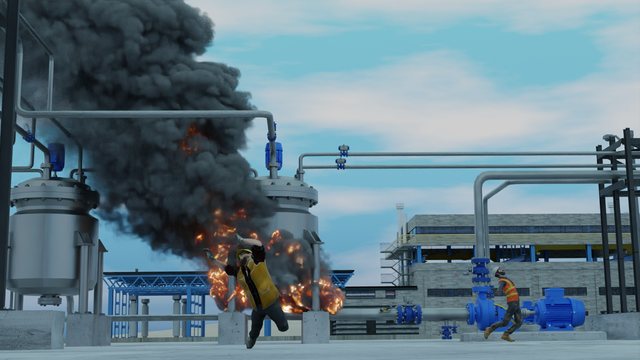
Process accident case · Inadequate isolation
The valves were closed. The reactor was not isolated.
No welding, no entry, so valves seemed enough. The cutting wheel was hot work.
UProcessFrom Trevor Kletz, What Went Wrong?2 killed
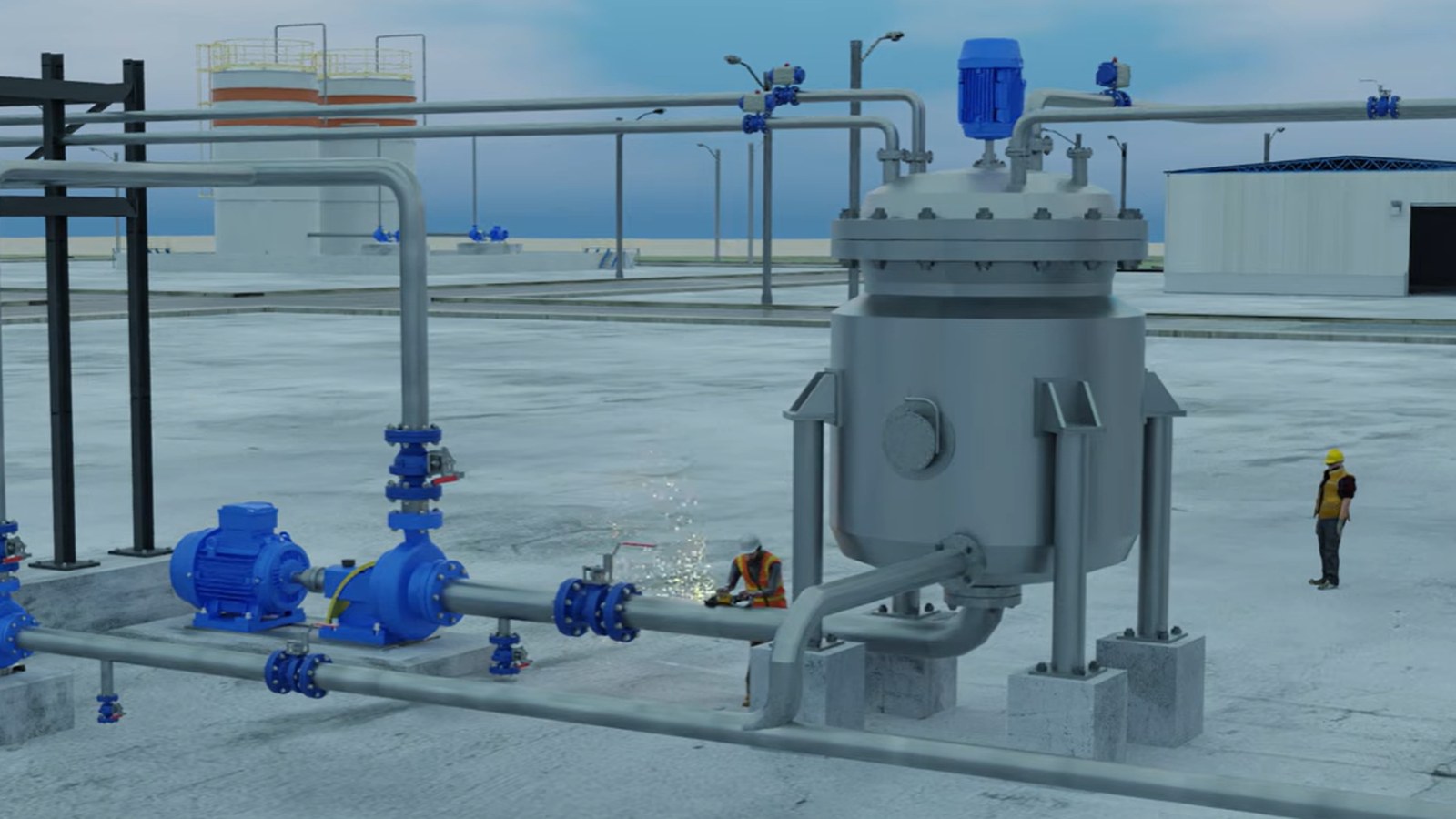 12345The moment before ignition
- 1The closed valves. Trusted as the isolation. Vapour passed through them.
- 2The reactor. Washed out for maintenance. About 7 kg of vapour was enough.
- 3The cut. A high-speed abrasive wheel through an attached line: it throws a flame and the pipe glows red.
- 4The flange. Where a slip-plate or a removed spool would have ended it.
- 5The men at the vessel. The head was blown off. Two men were killed.
What happened, in orderSeven kilograms of vapour. Two men killed. Every valve closed.
- T+0Washed outReactor prepared for maintenance and washed out
- T+1Valves relied onNo welding, no entry: valves relied on, no slip-plates
- T+2Vapour leaksFlammable vapour leaks through the closed valves
- T+3Abrasive cutAn abrasive wheel cuts a pipeline on the vessel
- T+4IgnitionVapour ignites. Head blown off; two men killed
Bow-tie · none of the five barriers was in place on the day
The five barriers
| Barrier | What it is | What happened instead | System element |
|---|---|---|---|
| 1 · Positive isolation | Every line into the vessel slip-plated or physically disconnected before anyone works on it. | Valves were relied on because no welding and no entry were planned. | Safe work practices |
| 2 · Isolation rated against the hazard | The isolation follows what the lines contain, not the task: a valve-only isolation is rated before anyone accepts it. | Decided on the task — no welding, no entry — not on what the lines held. | Hazard analysis |
| 3 · Isolation proven before break-in | Before a line is cut, the isolation is proven: vented, drained, no flow, no vapour. | No proof of isolation is described. Vapour leaked through the closed valves. | Operating procedures |
| 4 · Hot work control for abrasive cutting | Cutting and grinding are hot work: the same permit and precautions as welding. | Welding was counted as the ignition risk; the abrasive wheel was not. | Safe work practices |
| 5 · Gas test before and during hot work | The atmosphere at the cut and inside the vessel is measured before the work and repeated while it lasts. | No gas test is described. About 7 kg of vapour was enough for the explosion. | Safe work practices |
The rule
A closed valve is not an isolation. Before anyone breaks into a line, it is blinded or disconnected.
Safety talk · ask the crew
- Which lines into our next vessel are only valved?
- Who decided the isolation — the hazard, or the task?
- Which of our tools make sparks without being called hot work?
Positive isolationSlip-plateBreak-inHot workGas test
Before breaking into a line
- Every line blinded or disconnected
- Any valve-only isolation rated and approved
- Isolation proven before the cut
- Cutting and grinding under a hot work permit
- Gas test before and during the work
“A closed valve is not an isolation. Valves are not good enough.”After Trevor Kletz, What Went Wrong?
Made with UProcess